
5 things women at Systemair say matter most at work
At a time when manufacturing companies are competing fiercely for talent, understanding what helps people join, grow and stay has never been more important. In a conversation with participants in Systemair's Women's Mentorship Programme, CEO Robert Larsson noticed five recurring factors that support talent attraction and retention: visible role models, career development, flexibility, networks and sponsorship, and fairness.

While discussed through the lens of women's experiences, the insights apply to talent attraction and retention across the industry. As a global company, Systemair relies on people with different experiences, perspectives and ambitions.
As part of that journey, Systemair has set an ambition of reaching 25% female representation in leadership positions.
1. The importance of visible role models
Women already lead teams and functions across Systemair's global organisation, demonstrating the range of career paths available within the company. For Robert, making those stories more visible isn't about corporate messaging. It's about helping people see what's possible. "People need to be able to see a future for themselves in an organisation," he says. "If we want more women to consider careers in our industry, they need to be able to see women already succeeding in it."
When people can see others with similar backgrounds succeeding, leadership feels more achievable and career opportunities feel more real. McKinsey's Women in the Workplace research reaches a similar conclusion. Women are just as ambitious as men when they receive equal support and opportunities, but they often see fewer examples of advancement and receive less sponsorship along the way. [mckinsey.com]
2. Career development matters
Participants of the mentorship programme highlighted the importance of development opportunities, exposure to different parts of the business and access to guidance from experienced colleagues. The message was clear: people are more likely to stay when they can see a future for themselves.
Robert sees career growth as essential to retention. "Most people don't choose a company for the next six months. They choose it for what they believe their future could look like five, ten years from now,” he says.
3. Flexibility has become a business necessity
Participants spoke about support during parental leave and understanding of family commitments as important factors in both attraction and retention. For employers competing for skilled talent, flexibility is no longer simply an employee benefit. Increasingly, it is a business necessity. Participants spoke about support during parental leave and understanding of family commitments as important factors in both attraction and retention.
Research supports those views. Deloitte found that lack of flexibility is among the leading reasons women leave employers, while employees with greater flexibility are significantly more likely to stay long term. Their report For women, flexibility is a matter of time (not place) highlights the importance of giving employees greater control over when they work.
For a global company such as Systemair, which operates in diverse local contexts, Robert believes flexibility must be adapted locally while maintaining common principles. "Flexibility may look different across our businesses and geographies, but supporting people through different stages of life isn't a benefit, it's part of being a modern employer," he emphasises.
4. Networks and sponsorship open doors
The Women's Mentorship Programme was itself an example of something participants said they value: the opportunity to learn from others and build meaningful professional relationships. But participants also highlighted the importance of sponsorship, with leaders actively advocating for talented employees and helping create opportunities for growth.
"Careers rarely develop in isolation," says Robert. "People grow when someone opens a door, shares their experience or encourages them to take the next step."
Harvard Business Review famously highlighted that women are often "over-mentored and under-sponsored", meaning they receive advice but are less likely to have senior leaders actively advocating for their advancement. [hbr.org], [hbsp.harvard.edu]
Robert believes this is where organisations can make a tangible difference, helping talented people gain visibility, confidence and access to new opportunities.

Participants in Systemair Women's Mentorship Programme 2026
5. Transparency and fairness build trust
Participants spoke about transparency, equal opportunities and confidence that decisions are made on merit. Regardless of role or location, people want to understand how opportunities are created and how career decisions are made.
McKinsey's findings indicate that women are more likely than men to question whether opportunities are distributed equitably and whether gender affects advancement prospects. Companies with transparent promotion and hiring practices tend to achieve stronger representation outcomes. [mckinsey.com]
For Robert, fairness is fundamental. "The goal isn't to lower standards. The goal is to ensure that standards are clear, opportunities are visible and decisions are based on merit."

Nele Ohmes, Systemair Germany
Building a stronger company
The themes discussed at Systemair reflect wider conversations taking place across manufacturing and industry. For Robert, the lesson is simple: when people can see opportunities, access support and progress based on merit, organisations become stronger, more attractive employers.
"People do their best work when they can see opportunities ahead of them, when they feel supported and when they know they'll be judged on their merits. If we can create that kind of environment, we won't just attract more women. We'll become a stronger company," Robert concludes.
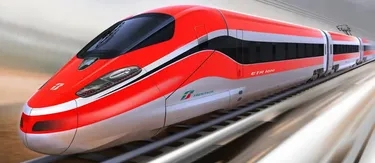
The V300 Zefiro project: keeping high-speed rail moving sustainably
By refurbishing rather than replacing equipment, Systemair is helping to keep valuable materials in use, preserving approximately 39 tonnes of metal while supporting another decade of reliable operation.
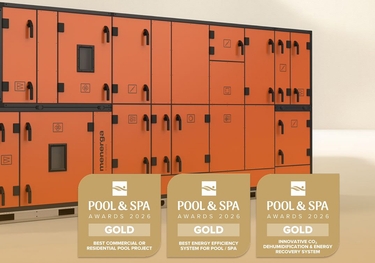
Menerga Hellas wins three gold awards
At the prestigious Pool & Spa Awards 2026 in Greece, Menerga CO₂mpass technology received three Gold Awards.
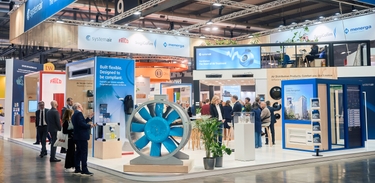
Crowded at the Mostra Convegno Expocomfort
In March 2026, the Systemair, Frico, SagiCofim, and Menerga teams participated in the Mostra Convegno Expocomfort (MCE) in Milano, one of the world’s leading international trade fairs for the HVAC industry.